Last updated November 23, 2026
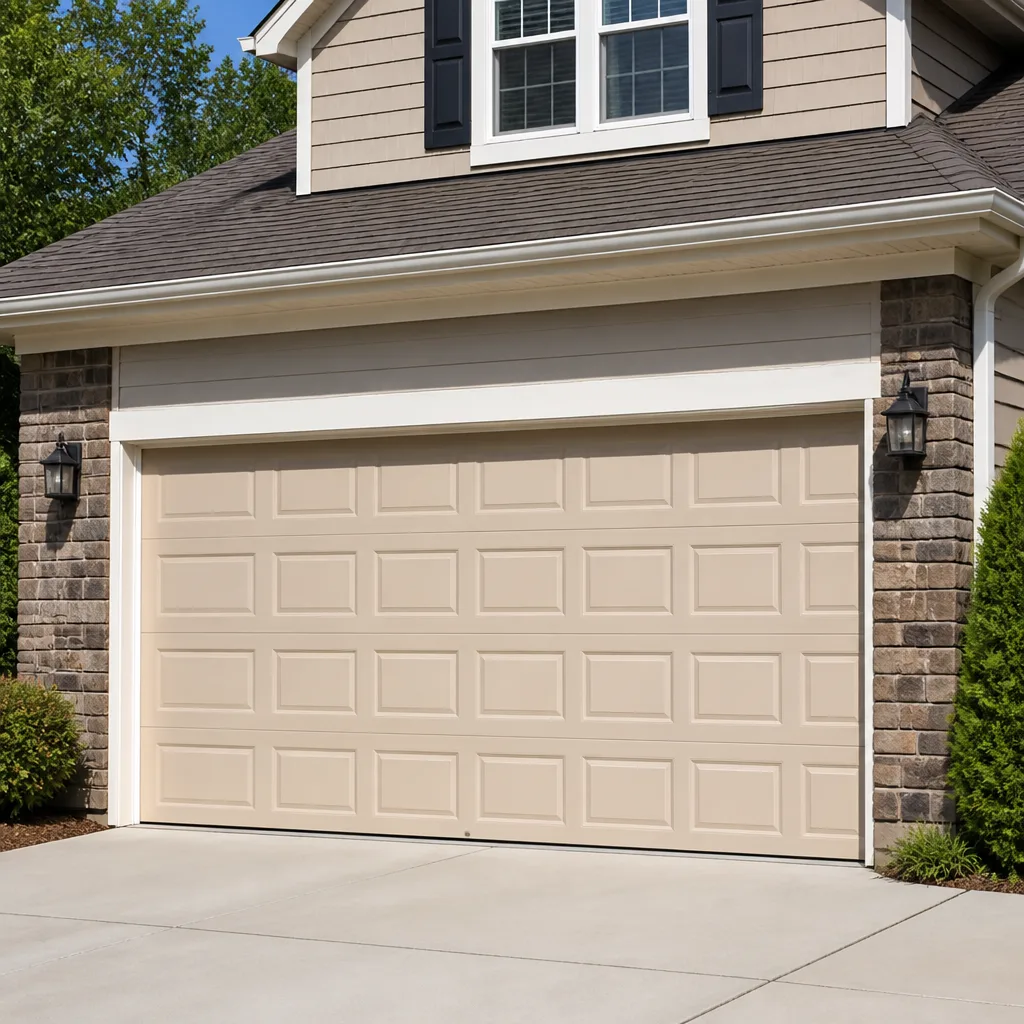 Raised-panel steel
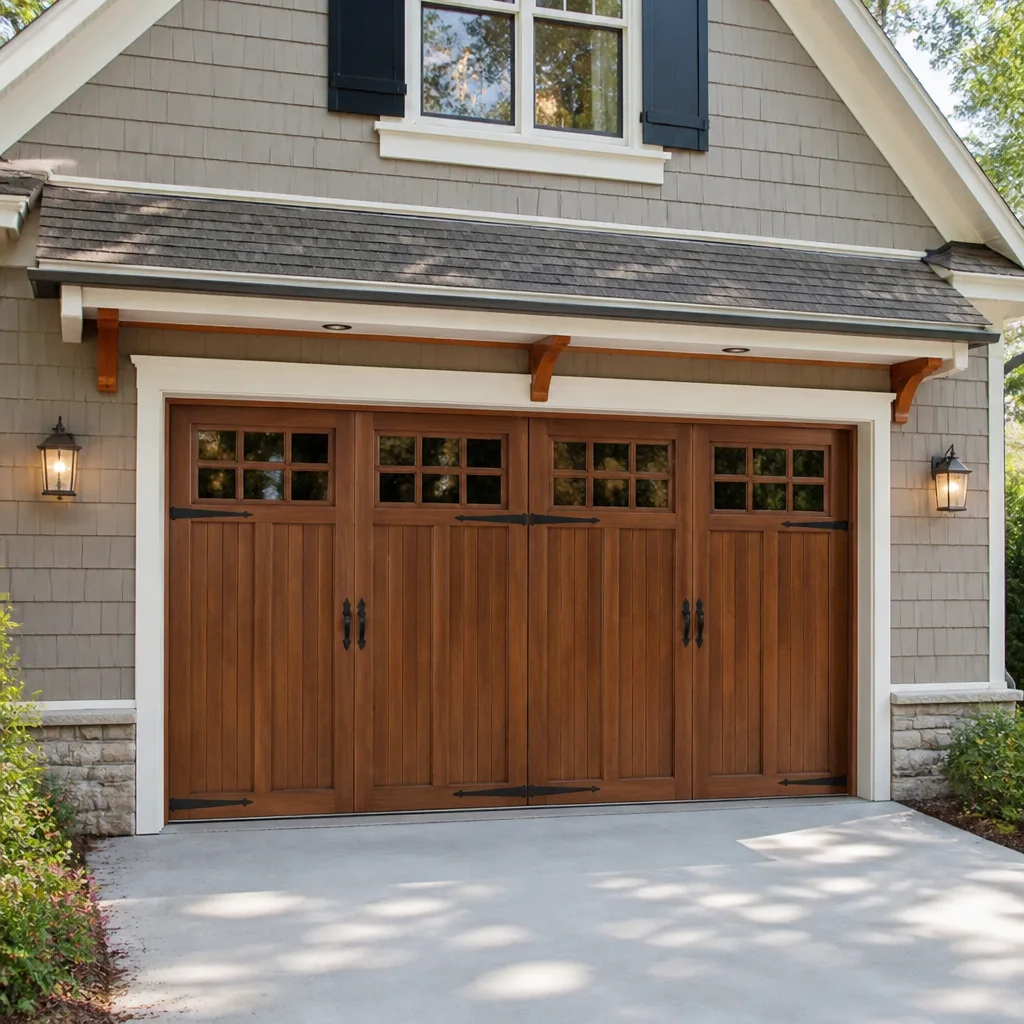 Carriage house
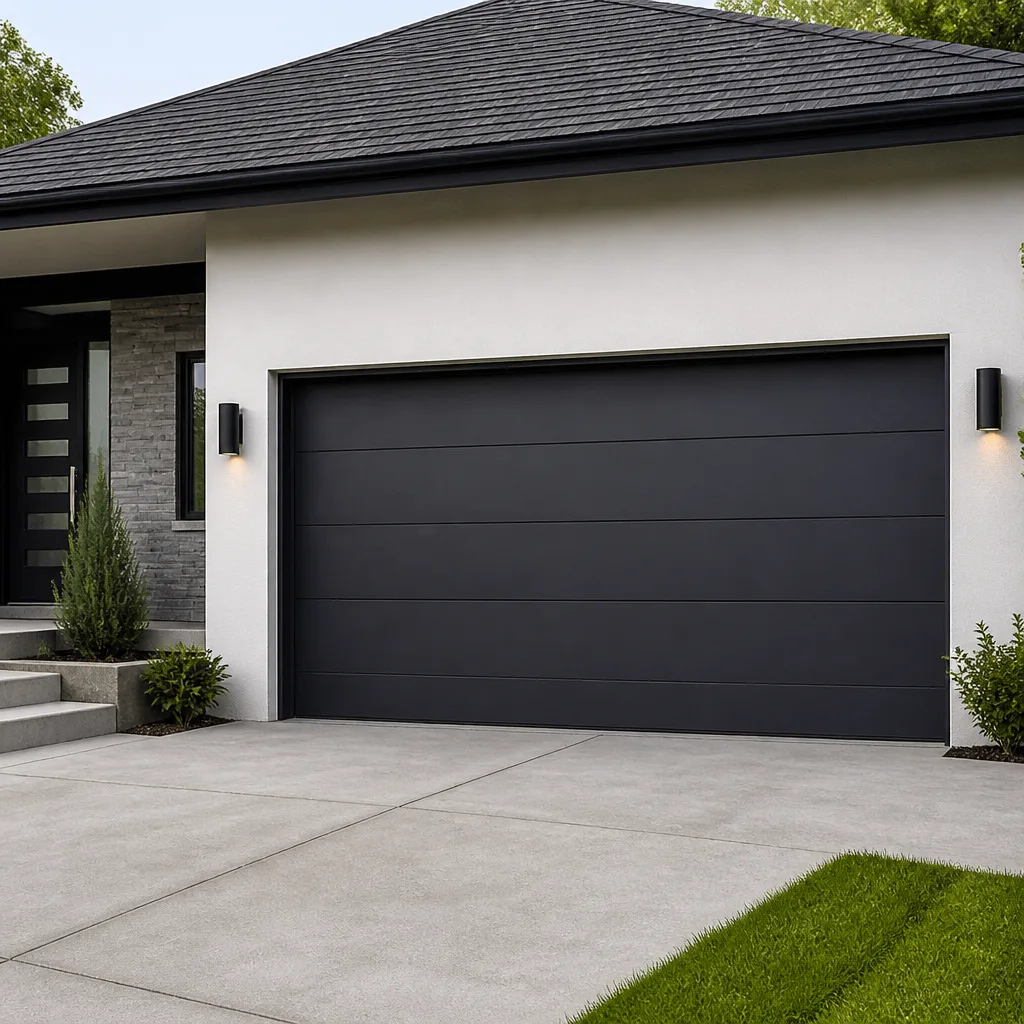 Modern flush
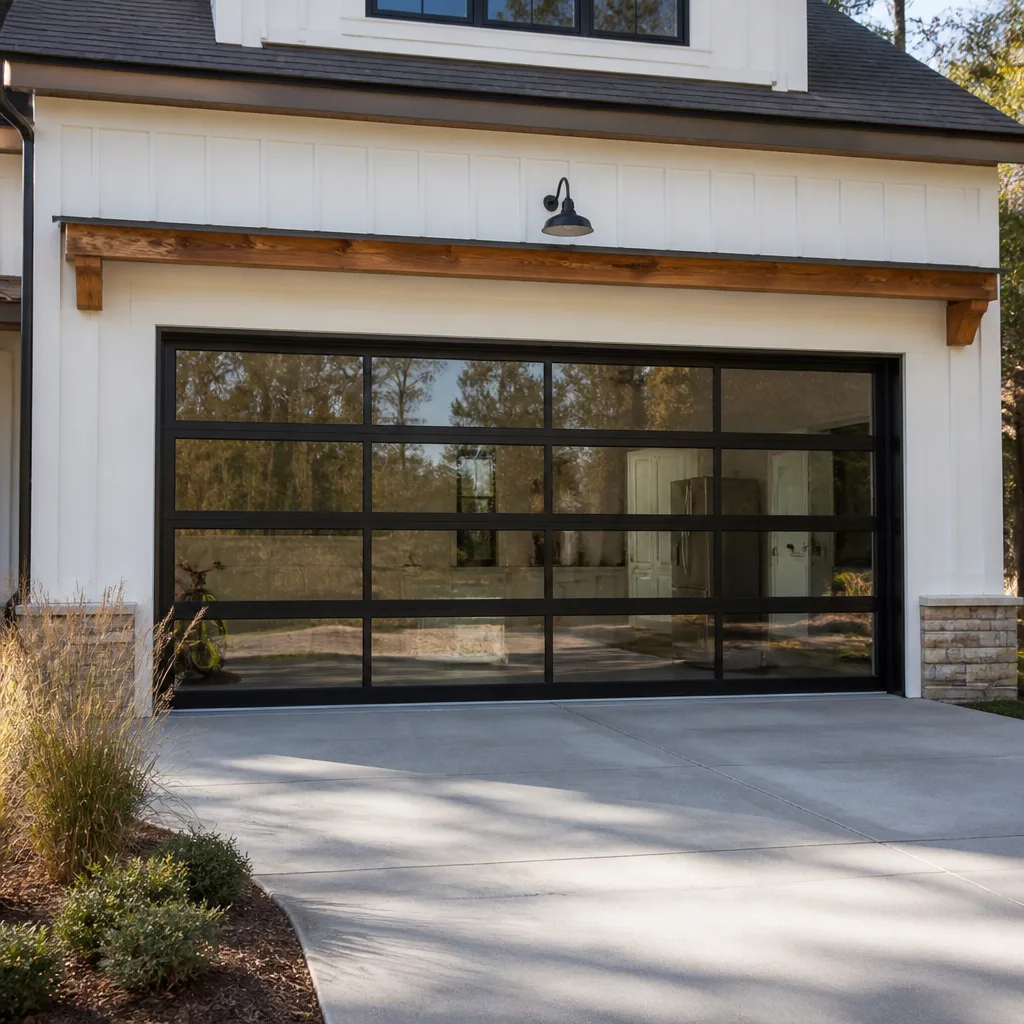 Full-view glass
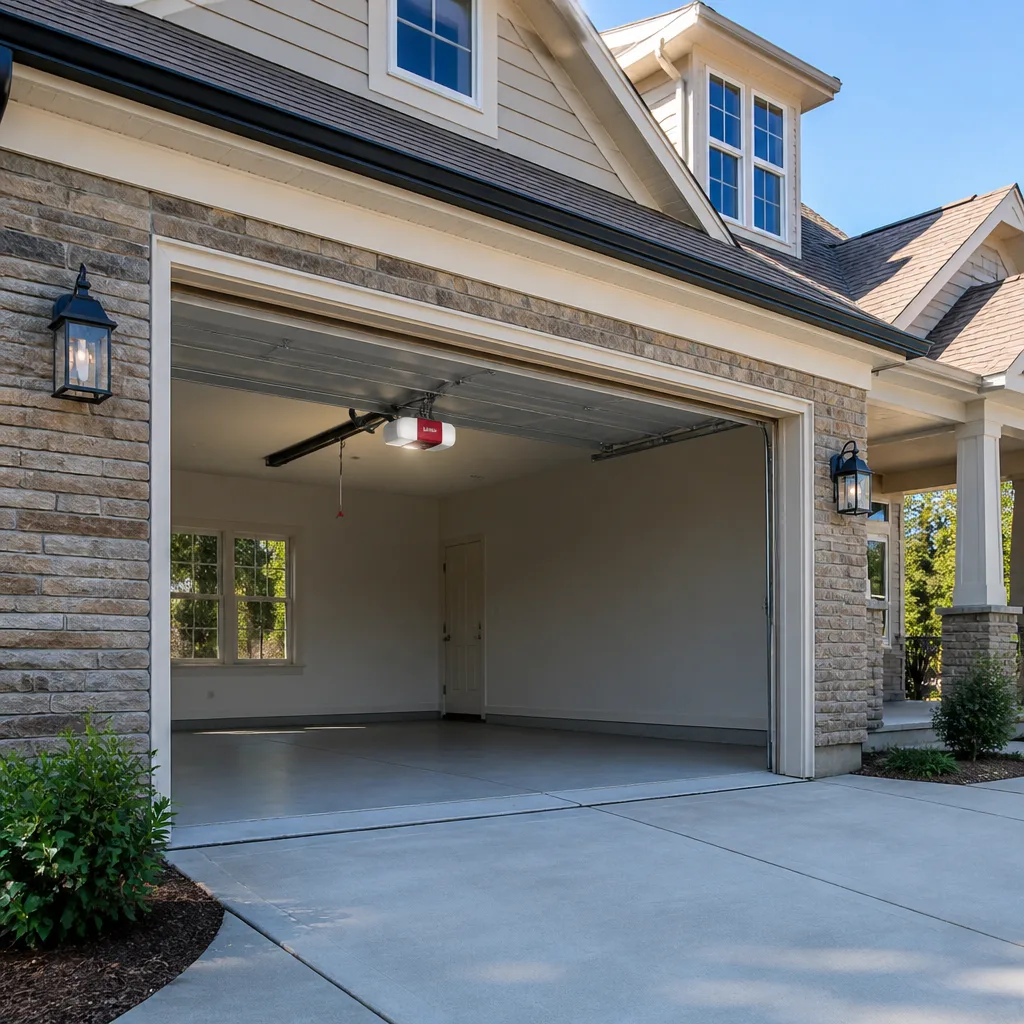 LiftMaster openers
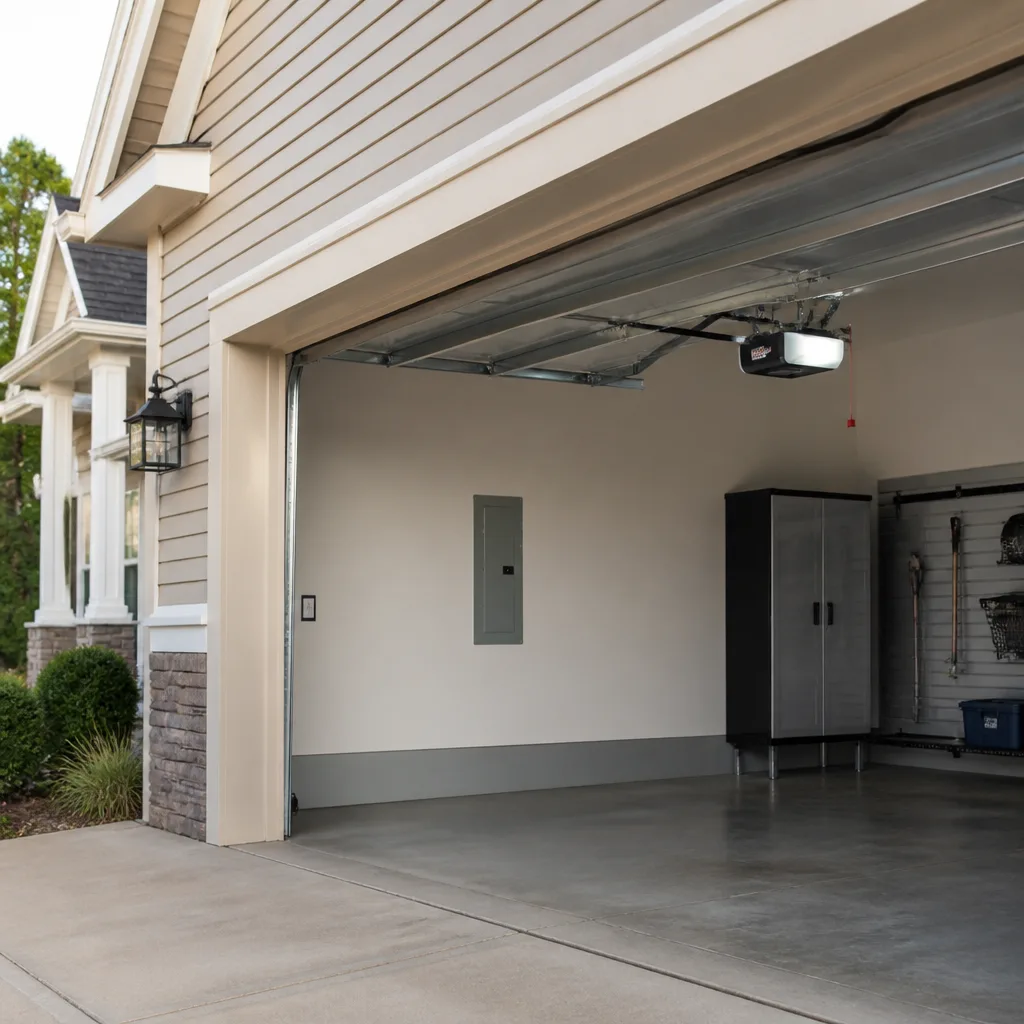 Chamberlain openers
Full 25-point door and opener safety check with every visit - springs, cables, rollers, tracks, and your LiftMaster or Chamberlain opener included
You get a price before we start. It does not change when the pro arrives.
Get your free estimateGarage Door Permits, Codes & Inspections in Tuckahoe, VA: What You Need to Know
Most Tuckahoe homeowners carry two assumptions around at the same time: a repair never needs a permit, and a full door replacement always does. Neither is quite right. The line that actually triggers a permit in Virginia runs through the Virginia Uniform Statewide Building Code, and it depends on structural work, new electrical rough-in, and whether the work counts as a like-for-like change. Getting that threshold wrong is quiet at the time and loud years later, during a home sale or an insurance claim, when an inspector asks for the permit record and there isn’t one. This guide walks through what the code requires, how Henrico County’s process works in practice, how to check what’s already on file, and how to avoid the paperwork trap that catches sellers under pressure. If you’re planning work in Tuckahoe, read this before the quote conversation, not after.
Quick Answer
In Tuckahoe and the rest of Henrico County, a garage door repair that replaces one component with an identical one, like a spring, cable, or panel, typically does not require a building permit. A full door replacement may require one depending on whether the work involves structural changes, and installing a new opener with new electrical rough-in generally does. Confirm with Henrico County’s building department before work starts, and make sure the finished job has a closed permit on record if one was required.
Styles & brands we work with
- Raised-panel steel
- Carriage house
- Modern flush
- Full-view glass
- LiftMaster openers
- Chamberlain openers
Table of Contents
- Does garage door work need a permit in Tuckahoe, VA?
- How the Virginia USBC sets the permit threshold
- How Henrico County’s permit process works in practice
- Wind load, safety codes, and what UL 325 means for your opener
- What “like-for-like replacement” means and when it exempts you
- How to check whether your existing installation has a closed permit
- What a garage door inspection actually covers
- Common mistakes to avoid
Does garage door work need a permit in Tuckahoe, VA?
Some garage door work needs a permit in Tuckahoe and some doesn’t, and the difference comes down to structure, electrical, and whether you’re swapping an identical part or changing the system. A broken torsion spring, a snapped cable, a bent track, or a dead opener motor are all repairs. Those swap parts for equivalents and generally fall outside permit territory. Work that changes the envelope of the house, adds a new electrical circuit, or replaces the door with a different size or weight class moves into the permit zone.
Here’s the practical breakdown for Tuckahoe homeowners:
- Spring, cable, roller, and hinge replacement: repair work, normally no permit. Most of what comes through as garage door spring repair in Tuckahoe falls here.
- Opener replacement with an existing outlet and existing wiring: usually no permit, because no new electrical is being run.
- New opener with a new dedicated circuit or new rough-in wiring: electrical work, which typically does need a permit and an electrical inspection.
- Panel replacement on the same door: normally no permit, since the structural opening doesn’t change.
- Full door replacement: depends on the jurisdiction and whether the header, jambs, or anchors are being modified. Some jurisdictions require a permit for every replacement, others only when structure changes.
- Changing door size or converting a manual door to an automatic one: expect a permit.
That first line is where most Tuckahoe calls start, because a spring is the part that fails most often and the one most homeowners want fixed the same day. Our technicians have up to 13 years of experience with the safety protocols around torsion and extension springs, which is where we’d point a homeowner who asks whether the repair is DIY-safe. It isn’t. Call us when a spring breaks and we’ll handle the mechanical side. For the paperwork side, the county is the final word.
How the Virginia USBC sets the permit threshold
The Virginia Uniform Statewide Building Code applies across Henrico County, including Tuckahoe, so the rules aren’t a local patchwork. The code sets when a building permit is required based on whether the work is structural, whether it adds or changes a building system, and whether it alters the structure’s ability to carry loads. A garage door replacement that changes the opening’s dimensions or requires framing changes falls inside that scope. Simply hanging a new door of the same size on the same opening usually doesn’t.
Three categories of work are the usual triggers in Tuckahoe:
- Structural modifications. Enlarging the opening, replacing a header, rebuilding a jamb, or altering the framing that carries the door’s weight. Any of those changes makes the work structural and permit-required.
- New electrical rough-in for openers. Running a new circuit, adding a dedicated outlet for the opener, or wiring a new safety sensor circuit as part of the installation. Existing outlets that already serve an opener don’t trigger this.
- Full replacement, in some jurisdictions. Whether a straight replacement requires a permit varies across Virginia localities. Henrico County’s building department is the authority for your address in Tuckahoe, and a quick call settles it before the trucks arrive.
One detail that catches homeowners: the USBC’s requirements for safety glazing, wind resistance, and door hardware apply whether or not a permit is pulled alongside. A permit isn’t what makes the code apply; the code applies either way. What a permit does is create a record that the work met code at the time, and that record is what a buyer’s inspector looks for. If you’re weighing a new door against repair, the code question is a factor in garage door repair decisions when the door is near the end of its life. And if the opener is the failing part, most of the diagnosis belongs in garage door opener repair territory before anyone talks permits.
How Henrico County’s permit process works in practice
Henrico County runs the permit process for Tuckahoe, and it’s doable online for most residential work. You apply, pay the fee, get the permit issued, complete the work, and schedule the inspection. The turnaround on a simple residential permit is often measured in days, not weeks, but plan for a week’s lead time so the door isn’t sitting half-installed while you wait for a piece of paper.
Here’s how the sequence usually goes for garage door work in Tuckahoe:
- Confirm whether a permit is required. Call Henrico County’s building department or check the county’s online permit portal. Give them the address, the scope (repair, replacement, new opener, structural change), and the door or opener model. They’ll tell you yes or no.
- Apply online if required. The portal takes the property details, contractor license information if a contractor is pulling the permit, scope description, and fee. For a simple residential door replacement, the application is short.
- Wait for issuance. Residential permits are often issued within a few days of a clean application. Structural work or anything that needs plan review takes longer.
- Complete the work. The licensed professional doing the installation handles this stage. Confirm who is pulling the permit before the work starts, because the permit holder is the one responsible for passing inspection.
- Schedule the inspection. Call or use the portal to book. Inspection windows are assigned, and someone needs to be home for the inspector to access the garage.
- Close the permit. Once the inspector signs off, the permit is closed and the record is on file against the address. That’s the document a future buyer’s inspector will pull.
The most common snag in Tuckahoe isn’t a permit denial. It’s a permit that gets applied for, the work gets finished, and the inspection never gets scheduled. That leaves an open permit on the record, which can stall a sale just as hard as no permit at all. Whoever pulls the permit should also own the inspection scheduling, and you should confirm the close-out happens.
Wind load, safety codes, and what UL 325 means for your opener
Garage doors in Tuckahoe face central Virginia weather, which means summer thunderstorms, the occasional strong frontal system, and winter wind events. Wind load matters for doors, especially larger doors and doors on homes that sit more exposed. Manufacturers publish wind-load ratings for their residential doors, and a replacement door should be rated for the wind exposure of the site. That’s a design detail, not a permit detail, but it’s part of the code story because the door still has to meet the structural and safety provisions the USBC adopts.
The safety item homeowners should know about is UL 325. It’s the standard governing garage door operators, and since 1993 it has required that automatic openers include an entrapment protection system. In plain terms, that means a door that comes down and meets an obstruction should reverse. Two mechanisms provide that protection:
- Photo-eye sensors mounted at the bottom of the door’s path. If the beam is broken, the door won’t close.
- Pressure or edge sensors built into the door’s bottom edge. If the door contacts something, it reverses.
Chamberlain and LiftMaster openers, common in Tuckahoe garages, both incorporate this protection. An older opener from before 1993, or a modern opener with a broken sensor, both fail the safety requirement. Fixing a sensor or replacing an older opener isn’t just a convenience upgrade, it’s a safety correction, and it’s one of the few times a repair conversation includes a check on the safety system. If the sensor is blinking and the door won’t close, we can diagnose it and let you know whether a sensor replacement or an opener replacement makes more sense. We work on LiftMaster, Chamberlain, Genie, Clopay, Amarr, Wayne Dalton, Craftsman, and Raynor systems, which covers essentially whatever a Tuckahoe homeowner already owns.
What “like-for-like replacement” means and when it exempts you
A like-for-like replacement swaps a component for one of the same size, weight class, and function without changing the structure. That’s the change that most often keeps work outside permit requirements. Replace a 90-inch door with a 90-inch door of similar weight and construction, hang it on the same tracks, hook up the same opener to the same outlet, and the work is a substitution, not a modification. In many jurisdictions, that doesn’t need a permit.
Where “like-for-like” breaks down:
- The opening gets modified. New door is a different height or width, or the framing changes to fit it. That’s a structural change.
- The door’s weight class changes. A heavier insulated door needs different springs and possibly different hardware. Once you’re re-springing for a different load, you’re past a simple substitution.
- The electrical service changes. A new opener on a new circuit, or a dedicated outlet where there wasn’t one, brings electrical work into the scope.
- The safety system needs new wiring. Some older installations have sensor wiring that runs through the wall or attic. Rerouting it can count as new electrical work.
- The door isn’t the same type. Replacing a sectional door with a different construction (say, changing to a wind-rated door that requires additional reinforcement) is an upgrade, not a like-for-like swap.
At the sharp end, the decision comes down to what the county building department says. Call them with the scope and the door specs and get an answer. If the answer is “no permit required,” note the date and the name of the person you spoke with. If it’s “permit required,” get the application in before the installation is scheduled.
How to check whether your existing installation has a closed permit
If you bought your Tuckahoe home with a garage door or opener installed by a previous owner, the permit history is worth checking. It takes a phone call or a portal lookup, and it’s the one thing that can turn a routine spring call into a paperwork problem. A closed permit means the work was inspected and approved. No permit on record, or an open permit, means the work either wasn’t permitted or the final inspection never happened.
Here’s how to check:
- Start with the address. Henrico County’s permit records are searchable by address through the county’s online portal or by phone with the building department.
- Ask for the full permit history. Not just the last permit. Garage door and opener installations don’t always show up under obvious descriptions, so scan the whole history for anything around the door opening, the opener circuit, or electrical work in the garage.
- Check the status. An “issued” permit that never reached “closed” or “finaled” is an open permit. It shows up in a title search and gets flagged during a home inspection.
- Look at the installation itself. The permit record and the physical installation should line up. A door that was clearly installed after the home was built with no corresponding permit is a sign the work wasn’t permitted.
- If there’s no record, ask what it takes to resolve. Some counties will accept a retroactive permit application after an inspection. The process varies, and Henrico County’s building department is the authority on what’s possible for your specific installation.
We’ve seen this come up more often during resale than during repair, and it’s the reason we tell Tuckahoe homeowners to ask the permit question at installation time, not at listing time. A closed permit on a garage door replacement is a short document that answers a lot of questions later.
What a garage door inspection actually covers
A garage door inspection in Tuckahoe is usually one of three things. A county building inspector reviewing permitted installation work, a home inspector reviewing the door during a real estate transaction, or a garage door technician checking the system for safety and wear. The first two are for the record. The third is for you.
When a technician inspects a door, here’s what gets checked:
- Springs and cables. Torsion springs, extension springs, and the cables that carry the door’s weight. Cables that are fraying, springs that are near the end of their cycle life, and drums that are worn all surface here.
- Track and alignment. Track that’s been bent or knocked out of alignment, and rollers that are worn, cracked, or seized.
- Balance. A door that won’t stay at the halfway point when you lift it manually is out of balance. That’s usually a spring tension issue.
- Opener safety reverse. The UL 325 test: block the photo eye, and check that a door on a pressure sensor reverses on contact.
- Hardware. Hinges, brackets, and fasteners, along with the anchor points into the framing.
- Weather sealing. Bottom seal, side jambs, top seal. In central Virginia heat and cold, seals fail faster than the door does.
An inspection isn’t the same as a permit inspection, and it isn’t a substitute for one. But a technician inspection is what tells you whether a door that’s technically permitted is also safe. The safety caveat that matters most with any garage door work is the springs: torsion and extension springs store enormous energy, and handling them without the right training and tools is where serious injuries happen. We don’t recommend any homeowner adjust, remove, or replace a spring on their own. That’s a trained-professional job, and it’s the reason our spring repair work is a separate line of service rather than something folded into general repair.
Common Mistakes to Avoid
- Assuming a replacement never needs a permit. In some jurisdictions, a full garage door replacement requires one even on a like-for-like swap. Henrico County’s building department will tell you in one call. Skipping the call is how an unpermitted install gets discovered during a home sale.
- Assuming a repair always needs a permit. The opposite error, and it happens less often, but it wastes time. Spring and cable repairs don’t normally require one.
- Forgetting the inspection after the permit is issued. A permit that never gets inspected stays open on the record. It can stall a sale just as easily as a missing permit. Whoever pulls the permit should schedule the final inspection and confirm it closes.
- Running a new opener circuit without checking. New electrical for an opener, new outlet, or new sensor wiring can require an electrical permit on top of anything else. Ask before the wiring goes in.
- Skipping the permit-history check when buying. If you’re buying in Tuckahoe, pull the permit history during due diligence. A previous owner’s unpermitted work becomes your paperwork problem after closing.
- Patching a safety reverse failure instead of fixing it. A photo eye that’s been bypassed or a pressure sensor that’s been disconnected is a UL 325 failure, not a temporary inconvenience. Get it fixed.
- Handling springs without training. The single most dangerous mistake in the list. Springs store enough energy to cause serious injury, and it doesn’t matter how many videos you’ve watched.
See the difference
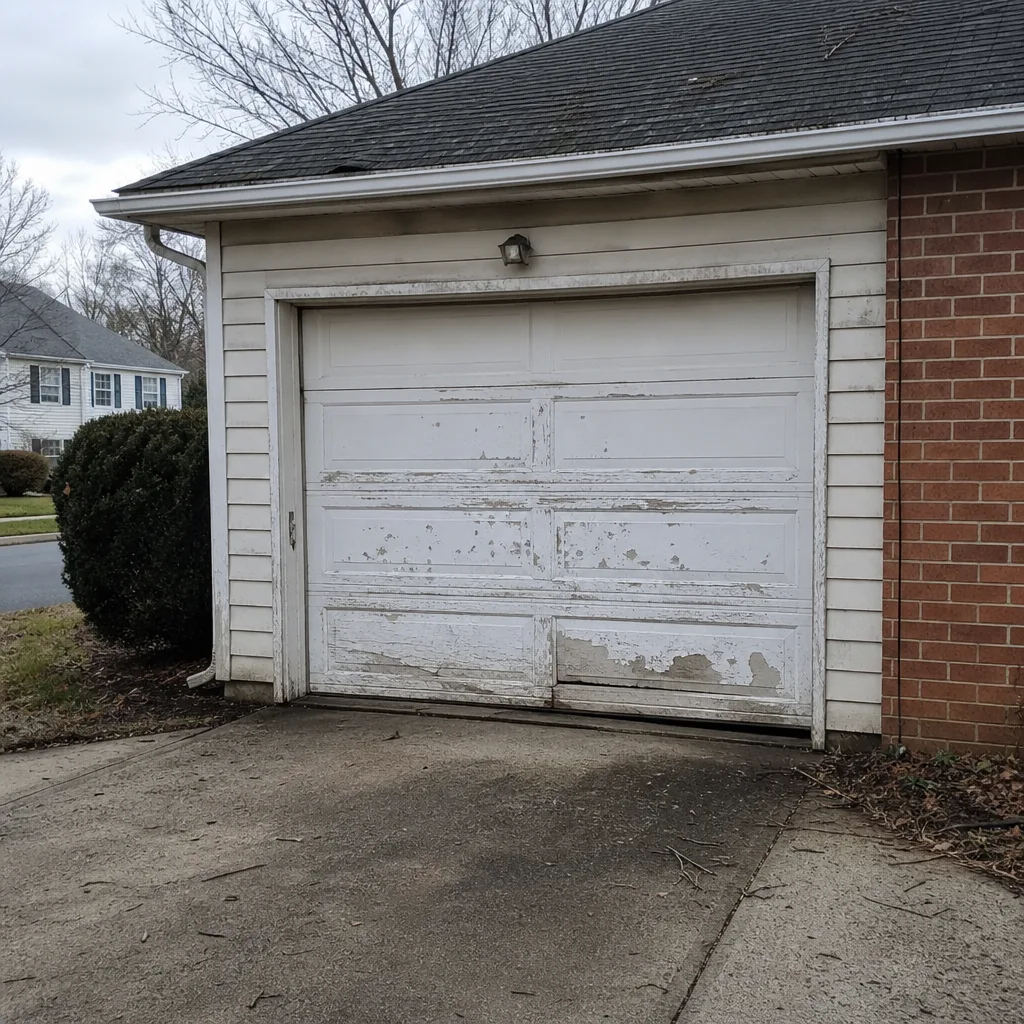 Before
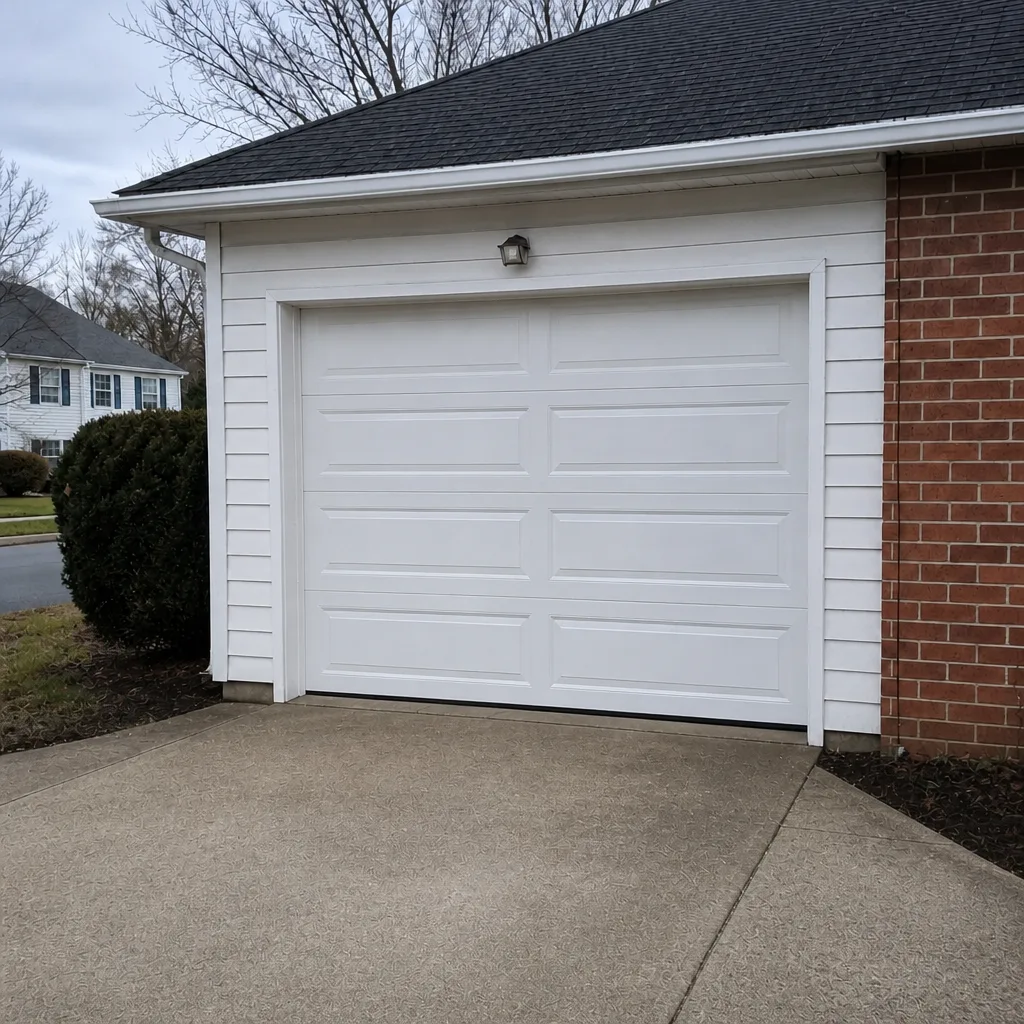 After
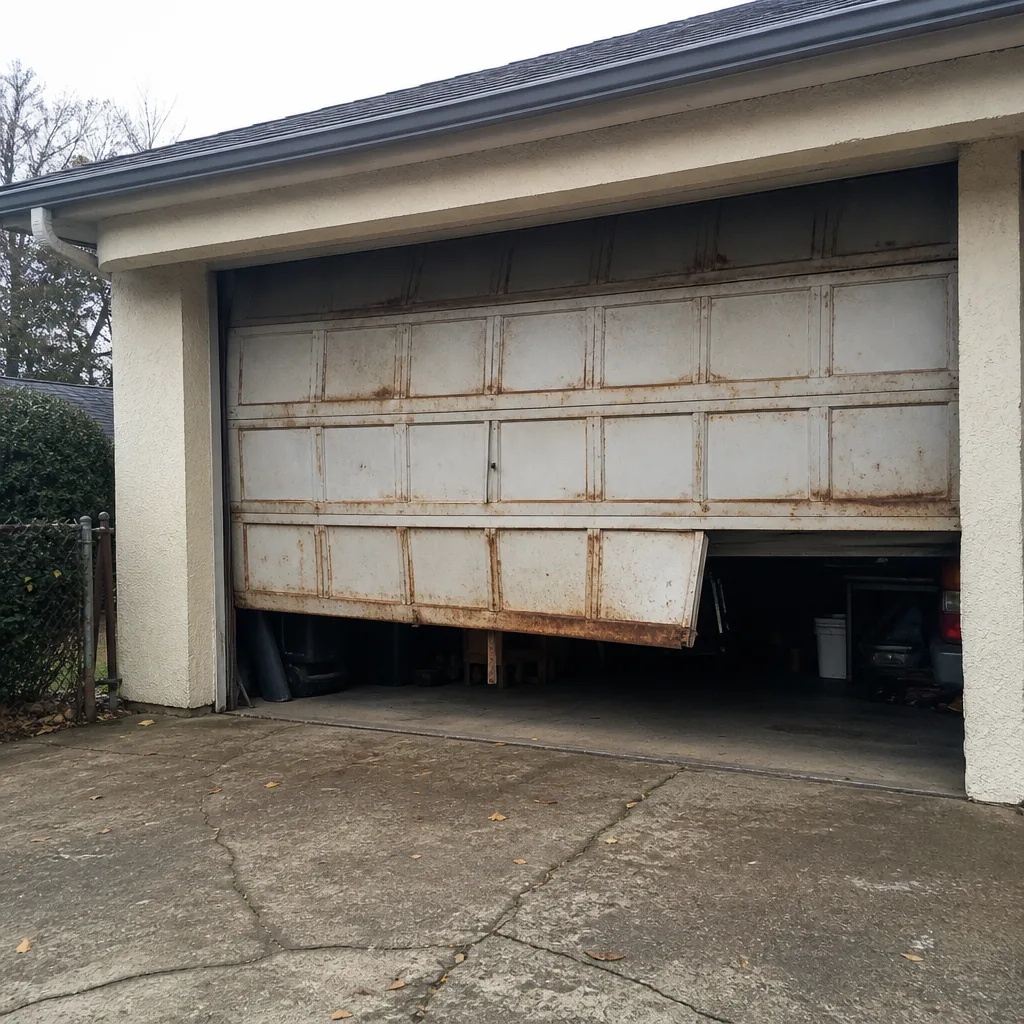 Before
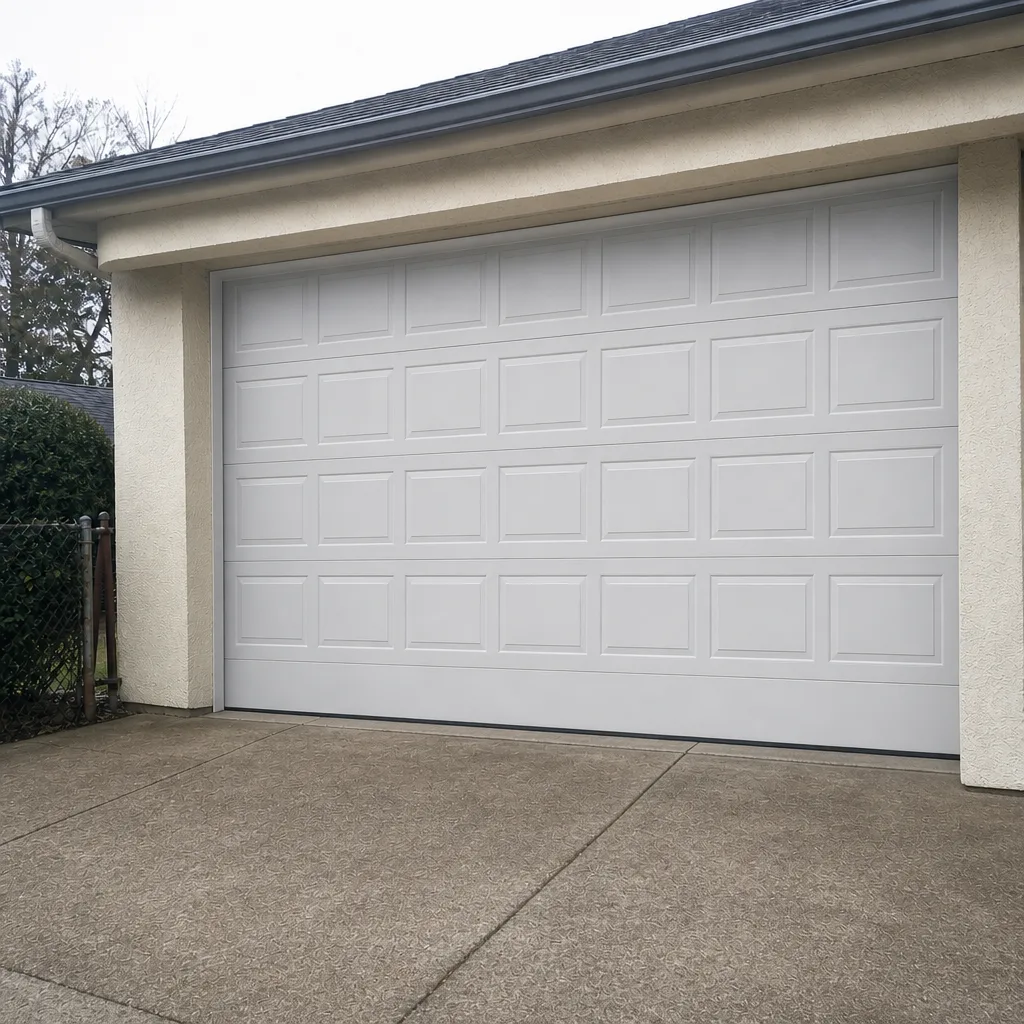 After
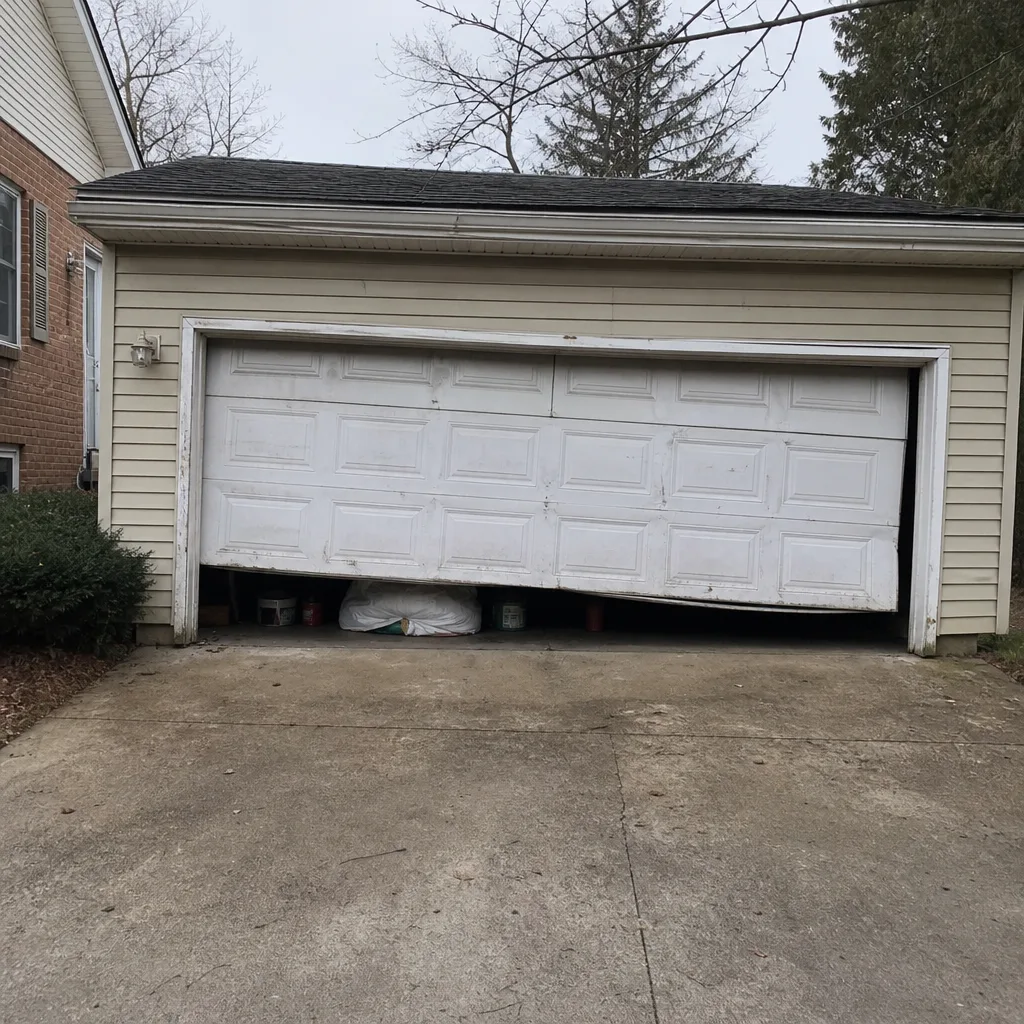 Before
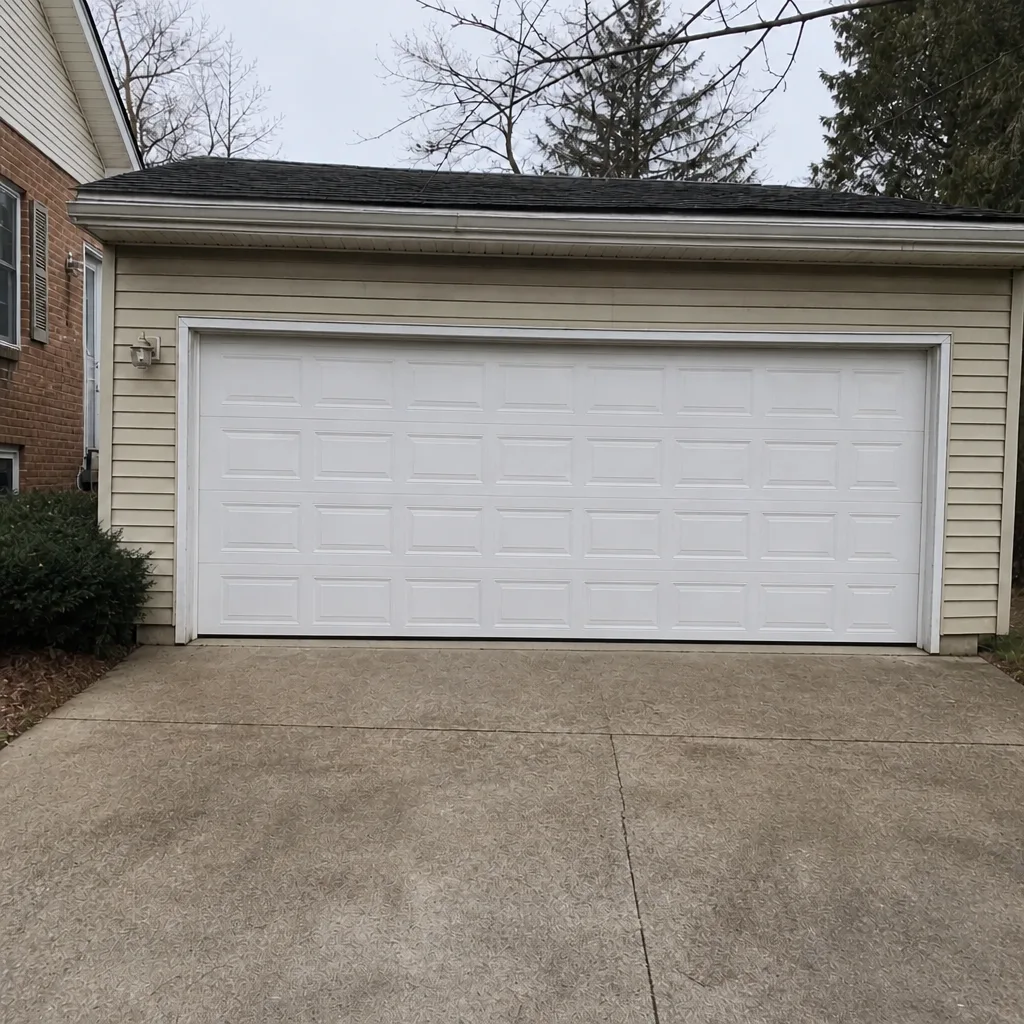 After
When to Call a Professional
There are a few situations where DIY crosses the line into a phone call. A spring that has snapped, a cable that’s frayed or come off a drum, a door that’s come off the tracks, and an opener whose safety reverse no longer works all belong on a professional’s docket. So does any installation that involves changing door size, adding an electrical circuit for an opener, or structural work on the opening. Beyond safety, a trained technician can tell you whether the job will require a permit before the work is quoted, which saves a headache down the line. Tuckahoe Garage Door Repair Pros offers free estimates in Tuckahoe. Call (866) 937-7740. We’ll look at the door, talk through what’s involved, and help you sort out whether the county’s process applies to your specific job before anything gets scheduled.
Frequently Asked Questions
It depends on the scope. A like-for-like replacement on the same opening, with no structural changes and no new electrical work, usually does not require a permit in Henrico County. A replacement that changes the opening size, modifies framing, or needs new electrical for an opener typically does. Call Henrico County’s building department with your door specs before work is scheduled, and have the answer in writing.
It depends on the electrical work. Swapping a failed opener for a new one on the existing outlet and existing sensor wiring usually does not require a permit. Installing a new opener with a dedicated circuit or new rough-in wiring generally does, because the electrical portion falls under a separate inspection. Confirm the scope with the county, and if the answer is yes, get the application in before installation. Call (866) 937-7740 for a free estimate on the opener replacement itself.
Pull the permit history for the address through Henrico County’s online portal or by phone. Look for anything around the door opening, the opener circuit, or electrical work in the garage. If the door or opener was clearly installed after the home was built and no corresponding permit shows up, the work likely wasn’t permitted. A home inspector during a sale will flag it, and the seller carries the resolution.
UL 325 is the safety standard governing automatic garage door operators, and since 1993 it has required an entrapment protection system in the form of photo-eye sensors or a pressure edge. It applies to your opener regardless of the door’s age. If the sensors are disconnected or the door doesn’t reverse on obstruction, the system fails the safety requirement. An opener installed before 1993 won’t meet the standard and should be replaced. Call (866) 937-7740 to schedule a safety check.
A simple residential permit like a door replacement or opener installation is often issued within a few days of a clean application. Permits that need plan review, such as structural work or an opening enlargement, take longer. Build in a week of lead time between the permit application and the installation so the work isn’t waiting on paperwork. The county’s building department can give you a more precise timeline when you apply.
Some homeowners can, technically, but the code hasn’t gone anywhere just because no permit is involved. The door still has to meet safety, wind, and structural provisions, and an unpermitted install can still be flagged during a home sale. The bigger issue is the springs: torsion and extension springs store enough energy to cause serious injury, and handling them without training is where most garage door injuries happen. That part belongs with a trained technician. Call (866) 937-7740 for a free estimate before you attempt anything mechanical.
The Bottom Line
The permit question in Tuckahoe comes down to three checks: is the work structural, does it add new electrical, and is it a like-for-like swap. Spring and cable repairs rarely need a permit. New opener circuits usually do. Full replacements depend on the jurisdiction and the spec. Call Henrico County’s building department before the work starts, whoever pulls the permit should schedule the final inspection, and confirm it closes. If you’re buying in Tuckahoe, pull the permit history before closing. And on the mechanical side, leave the springs to a trained technician. Our technicians have up to 13 years of experience with every major brand, and Tuckahoe Garage Door Repair Pros can walk you through the paperwork side as well. Call (866) 937-7740 for a free estimate.
If you’re still working out whether your garage door system needs repair or replacement in Tuckahoe, the team at Tuckahoe Garage Door Repair Pros can look at the door, the opener, and the installation before the county conversation, so you know exactly what scope to describe when you call Henrico County’s building department.
Written by the team at Tuckahoe Garage Door Repair Pros.